
Bee Removal Melbourne | 24/7 Service
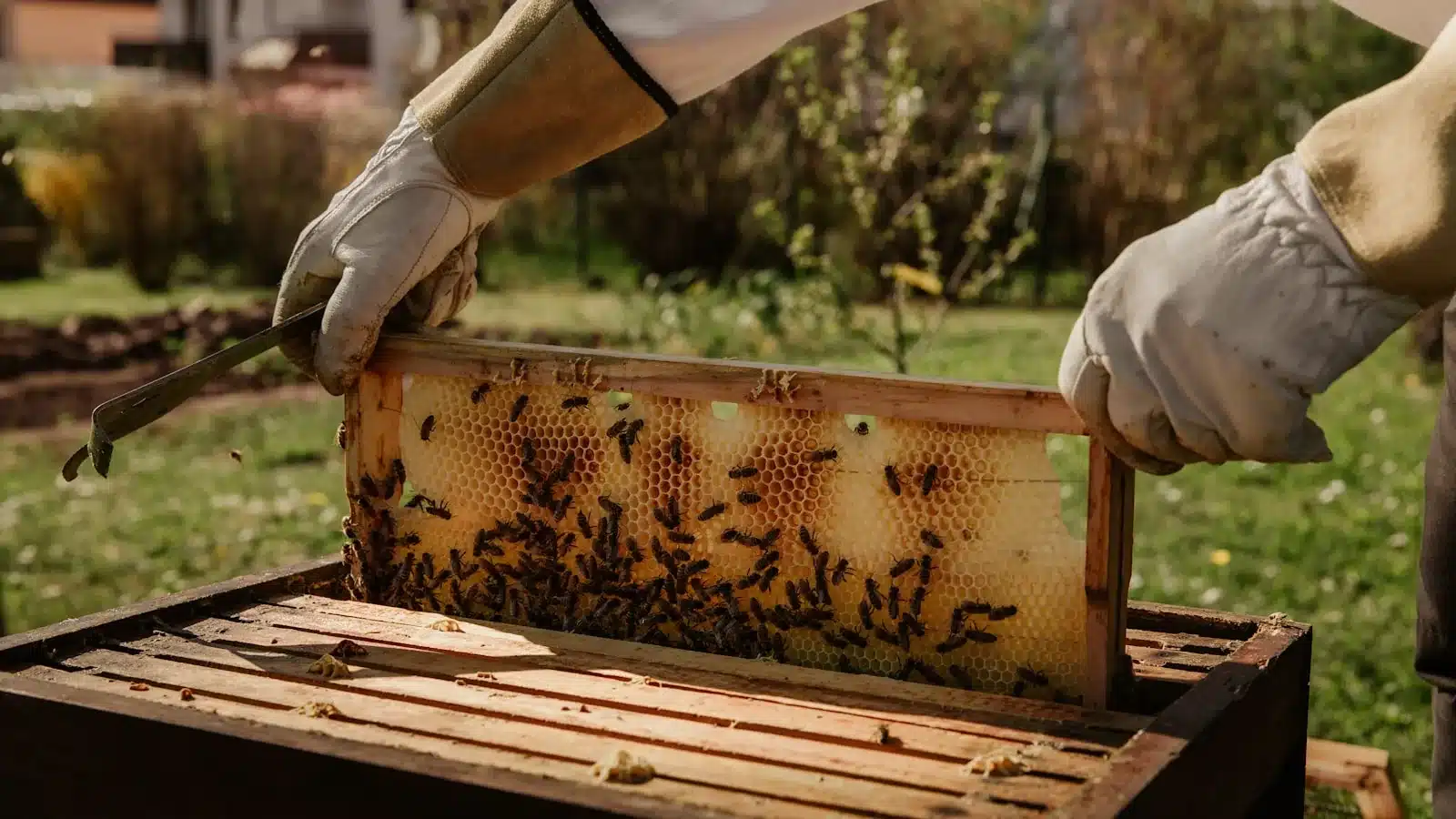
Swarm on a branch or a colony in the wall? We remove bees alive, relocate them to a managed hive, and seal the cavity so they do not come back.
Bees On Your Property? Start Here
Tell us your postcode and what you can see. Our Melbourne beekeepers will call you back with a clear written quote.
Request Your Quote
Takes under a minute — postcode and what you have noticed.
Three Ways Bees Turn Up
Swarm, established hive, or a cavity that keeps attracting them. Tell us what you can see and we will tell you which one you have.
 01
01Bee Swarm Removal
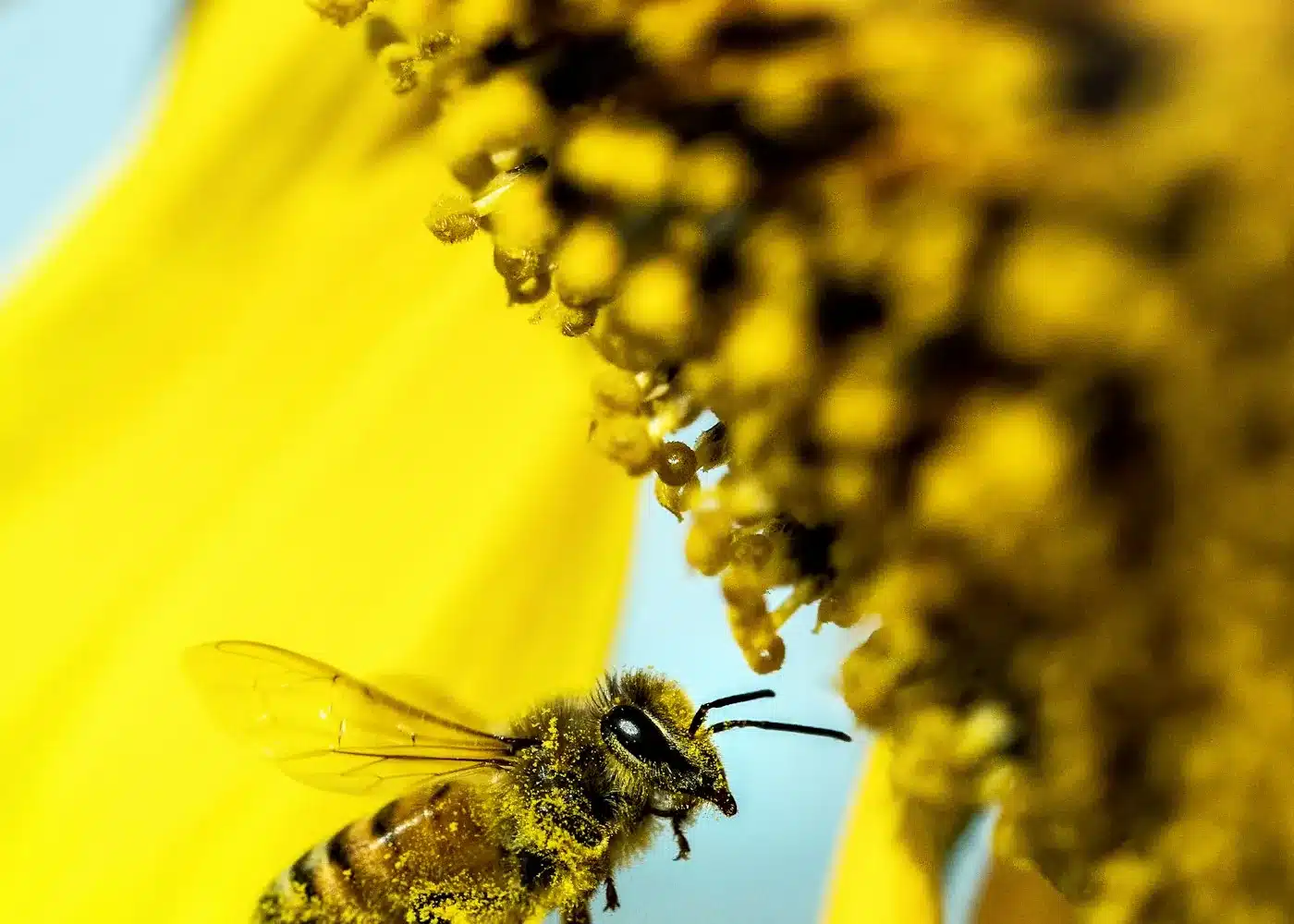
A swarm is a football-sized cluster of bees resting on a branch, fence or wall while scouts look for a permanent home. They are usually docile and easy to collect — and collecting them now stops them moving into your wall next week.
 02
02Beehive Removal
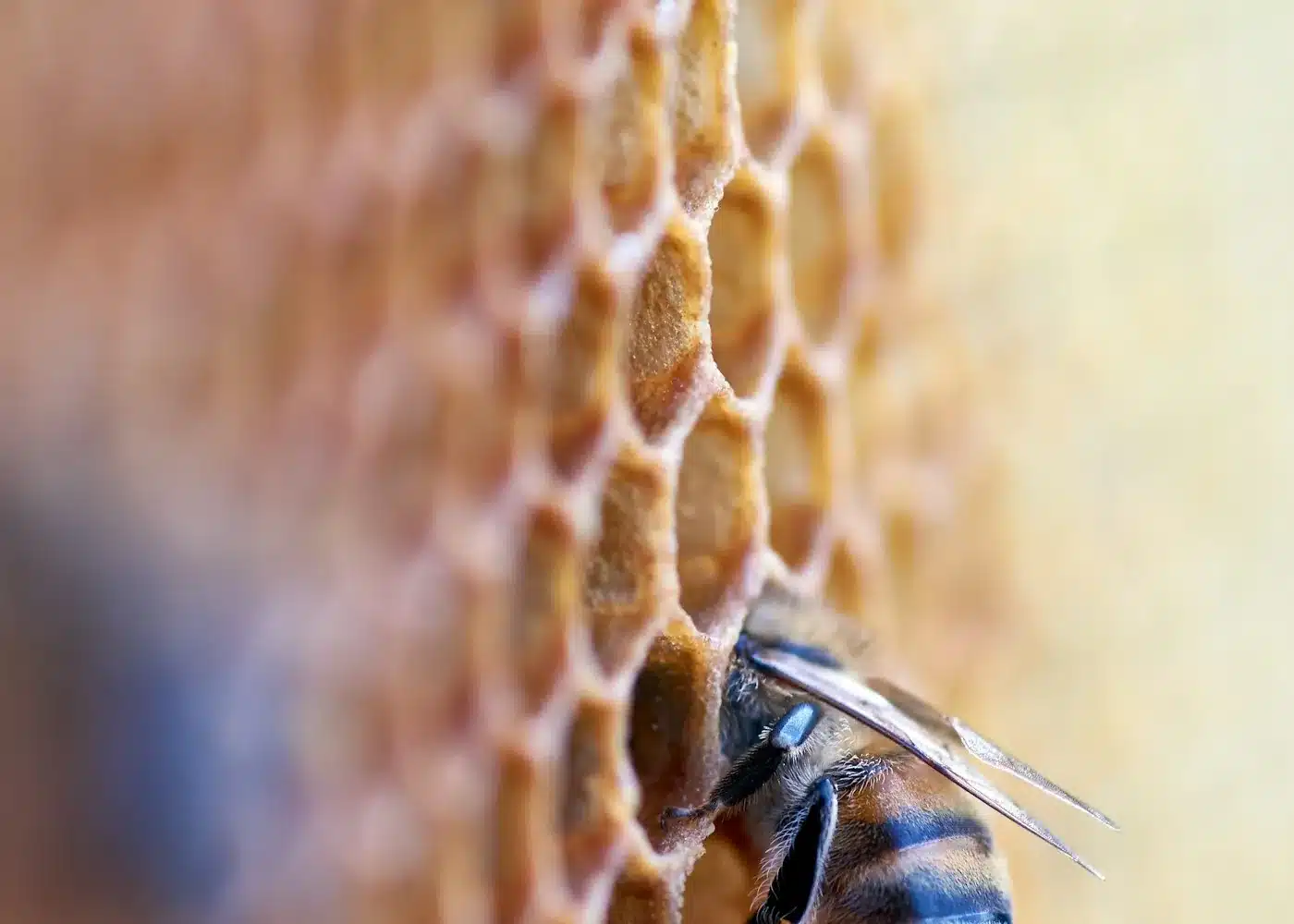
An established colony in a wall, roof or floor cavity needs a cut-out: opening the cavity, removing every piece of comb and brood, and rehoming the colony with its queen. Leave the comb behind and you get melting honey, staining and a second colony next season.
 03
03Bee Proofing & Repair
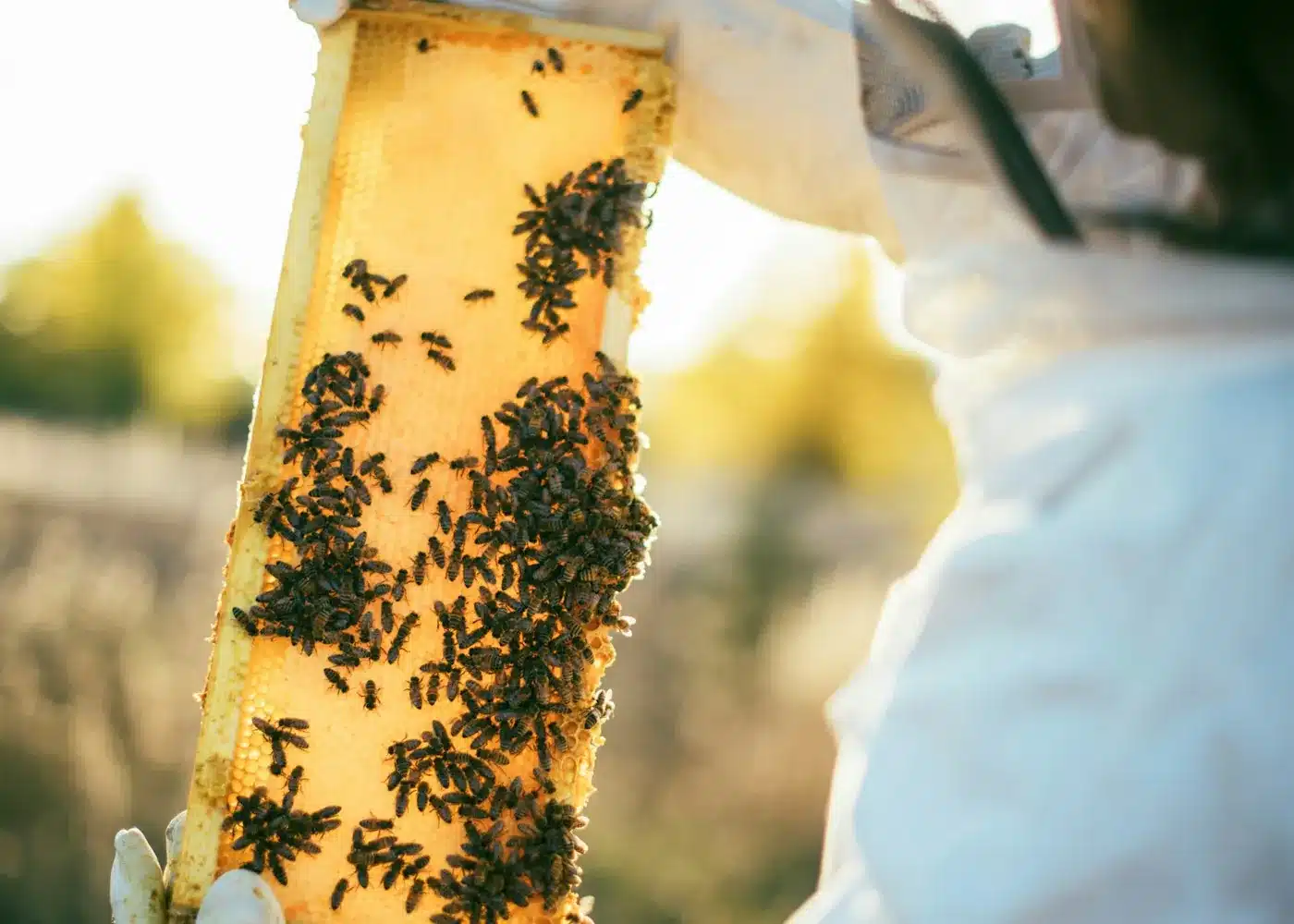
Once the colony is out, the cavity is cleaned, deodorised and sealed so nothing moves back in. Bees are drawn to old hive scent for years, which is why removal without proofing so often repeats.
Our Work, On Camera
Short clips from real Melbourne removals. Videos only load when you press play, so they never slow the page down.
Live Bee Removal
A full live removal from a Melbourne property, start to finish.
Hive Cut-Out
Opening up a cavity to reach established comb and brood.
Swarm Collection
Collecting a settled swarm before it moves into a wall.
Into The Hive Box
The colony rehomed into a managed hive rather than destroyed.
Not Every Bee Needs Removing
Australia has over 1,700 native bee species and almost none of them cause a problem. Only the European honey bee builds the large comb colonies that end up inside Melbourne buildings — the rest are solitary pollinators best left alone.

European Honey Bee
The one in your wall or swarming on a branch. Golden-brown with darker bands, lives in colonies of tens of thousands and makes the honey and comb. This is the species we remove and relocate.
We relocate
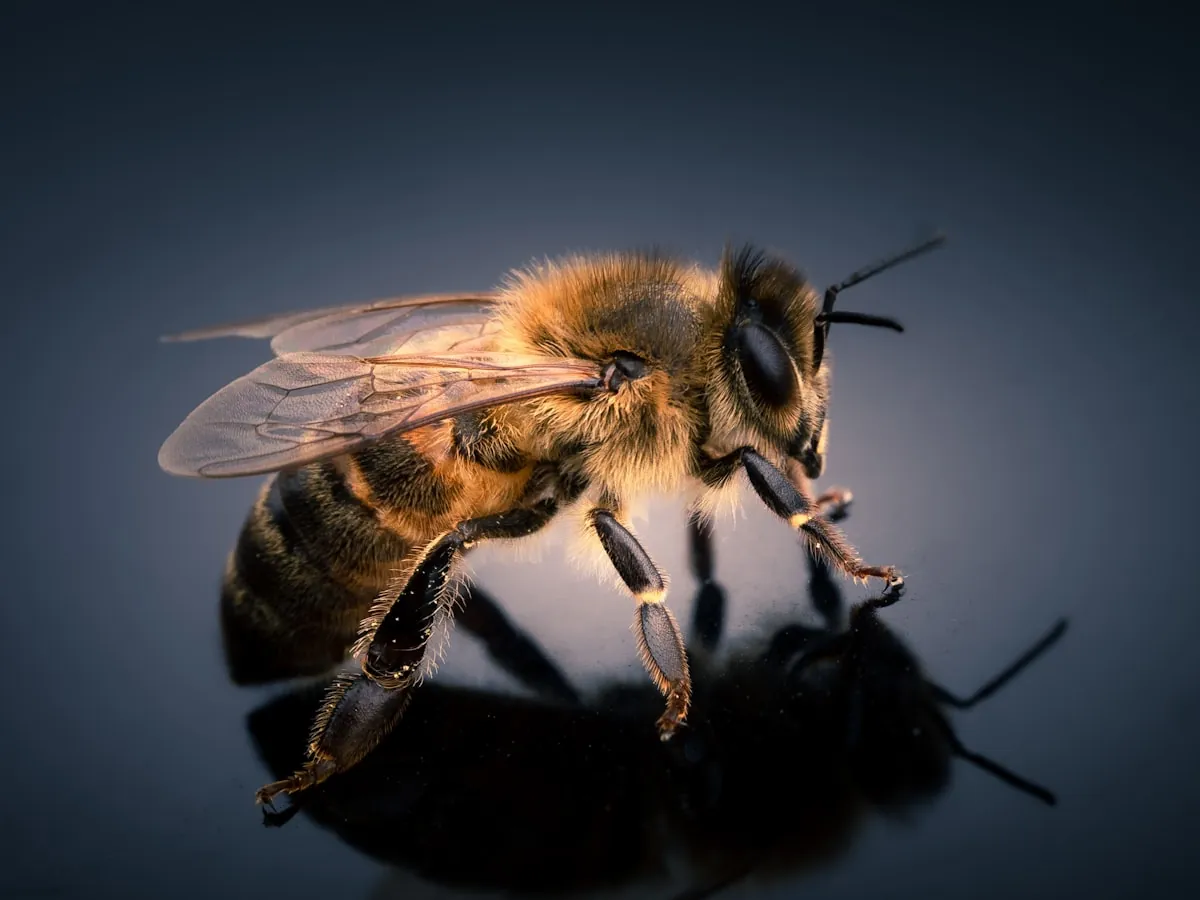
Stingless Native Bee
Tiny, black and completely stingless. Nests in hollows and wall cavities in small colonies. Harmless, and in Victoria they are uncommon — if you have one we will usually recommend leaving it be.
Protected native
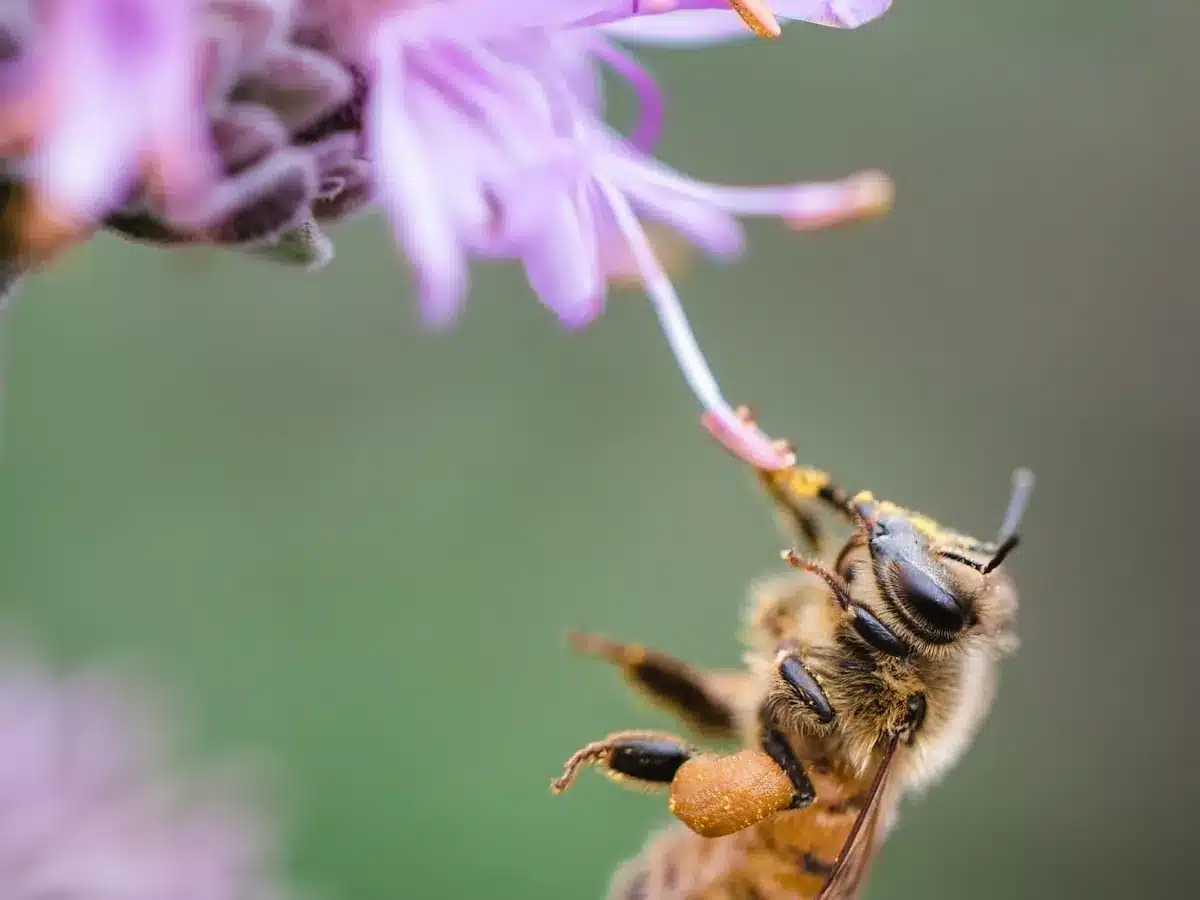
Blue Banded Bee
Striking metallic blue bands, and a solitary nester in soft mortar or clay banks. A superb pollinator that never forms a hive, so there is nothing to remove.
Solitary native
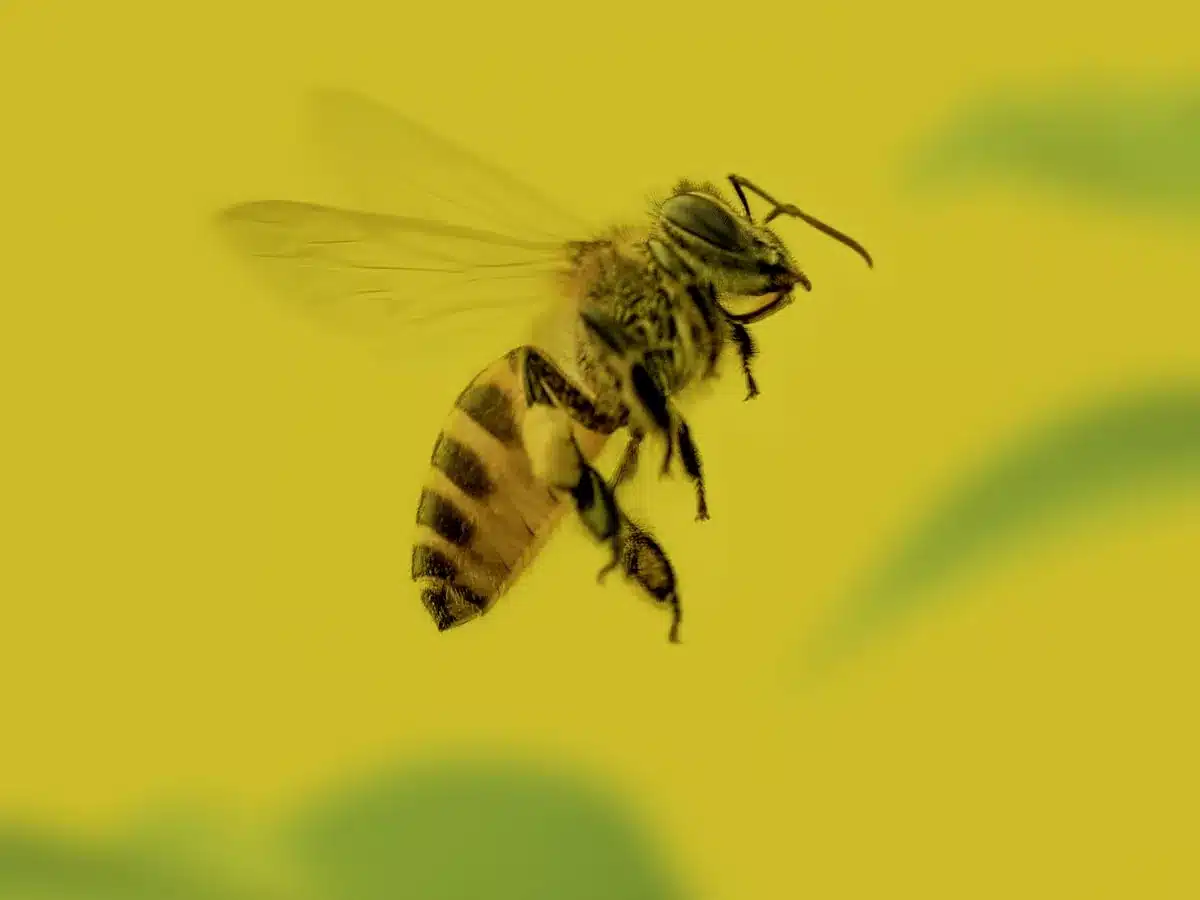
Teddy Bear Bee
Round, golden and very furry, like a small bumblebee. Solitary, docile and nests in burrows. Often mistaken for a bumblebee, which does not occur on mainland Australia.
Solitary native
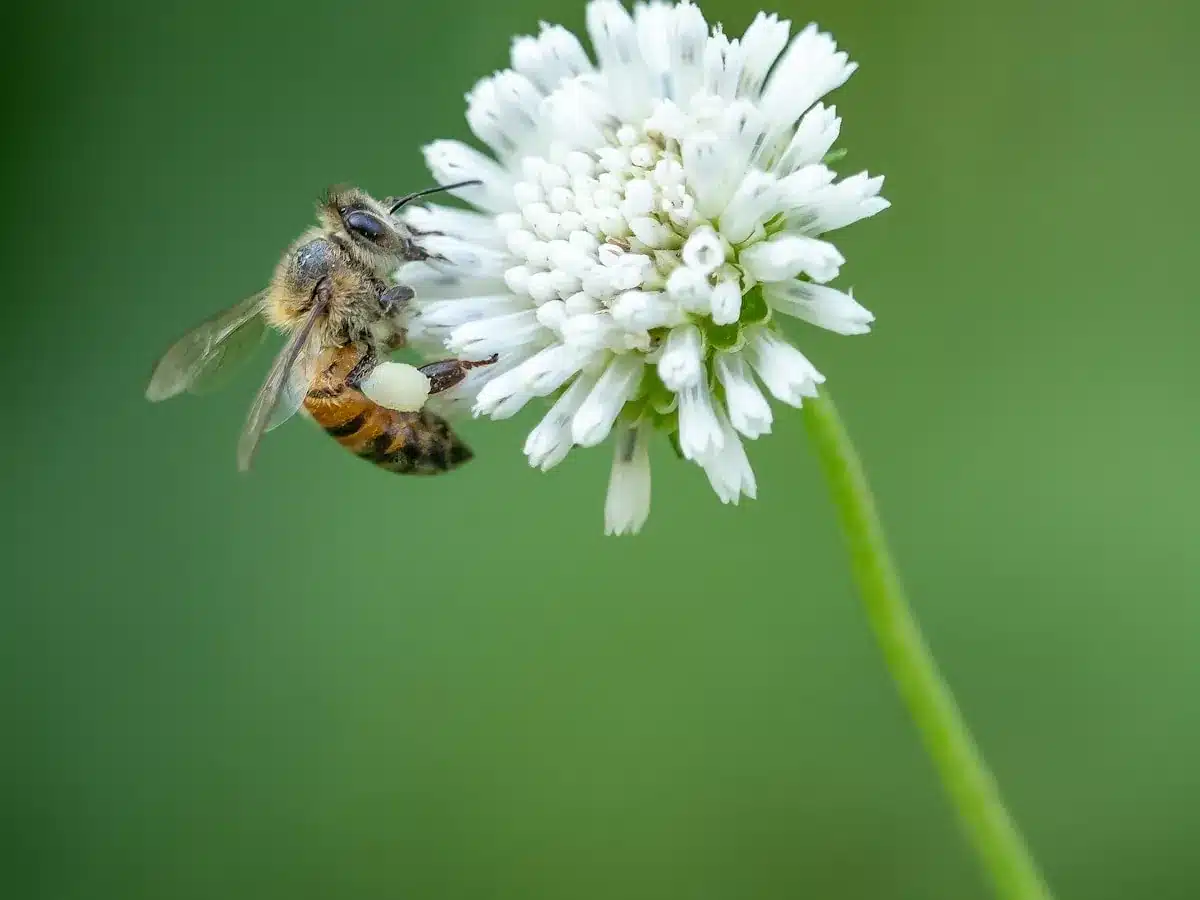
Leafcutter Bee
Cuts neat semicircles from leaves to line its nest tunnels. If your roses have tidy round notches, this is the culprit — and it is a pollinator worth keeping.
Solitary native
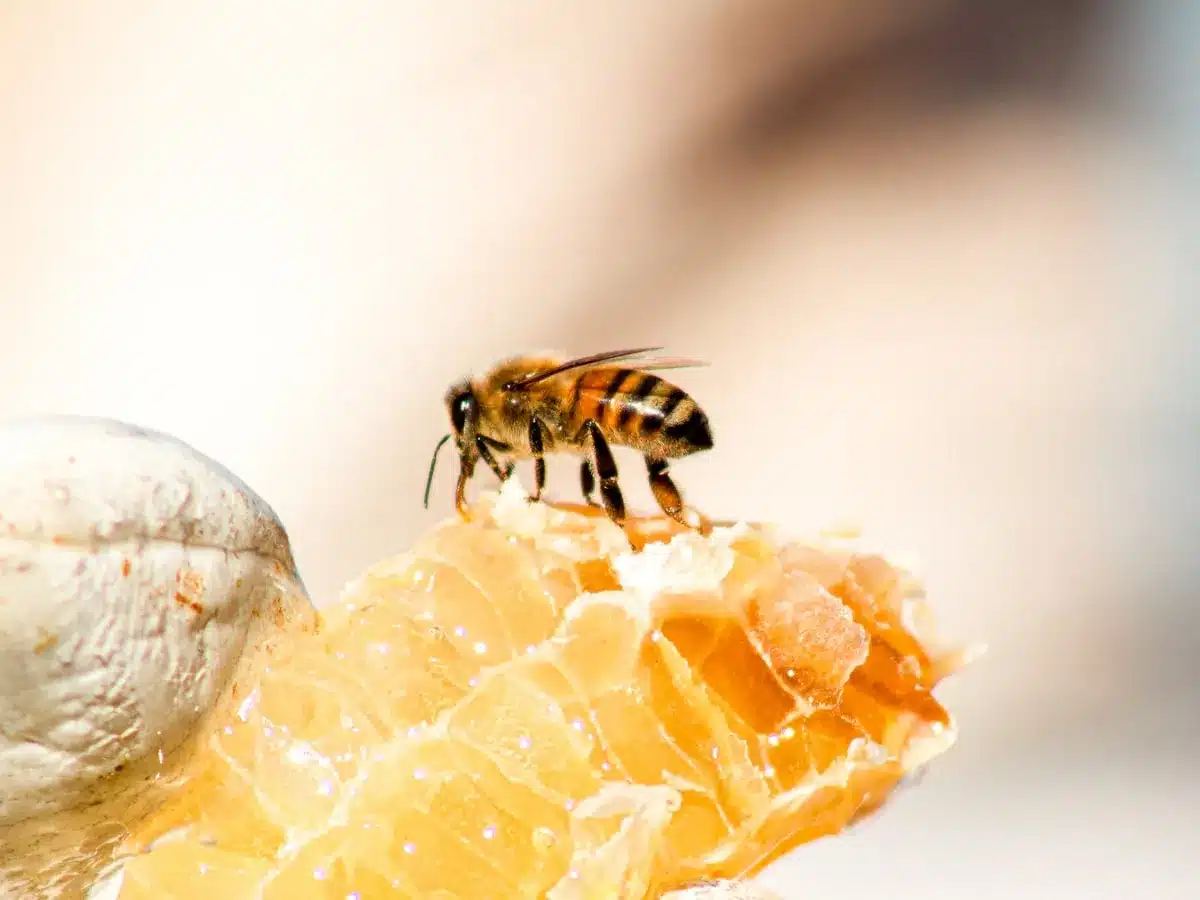
Resin Bee
Black with pale or orange banding, sealing its nest holes with plant resin. Uses gaps in timber, brickwork and bee hotels. Solitary and no threat to a building.
Solitary native
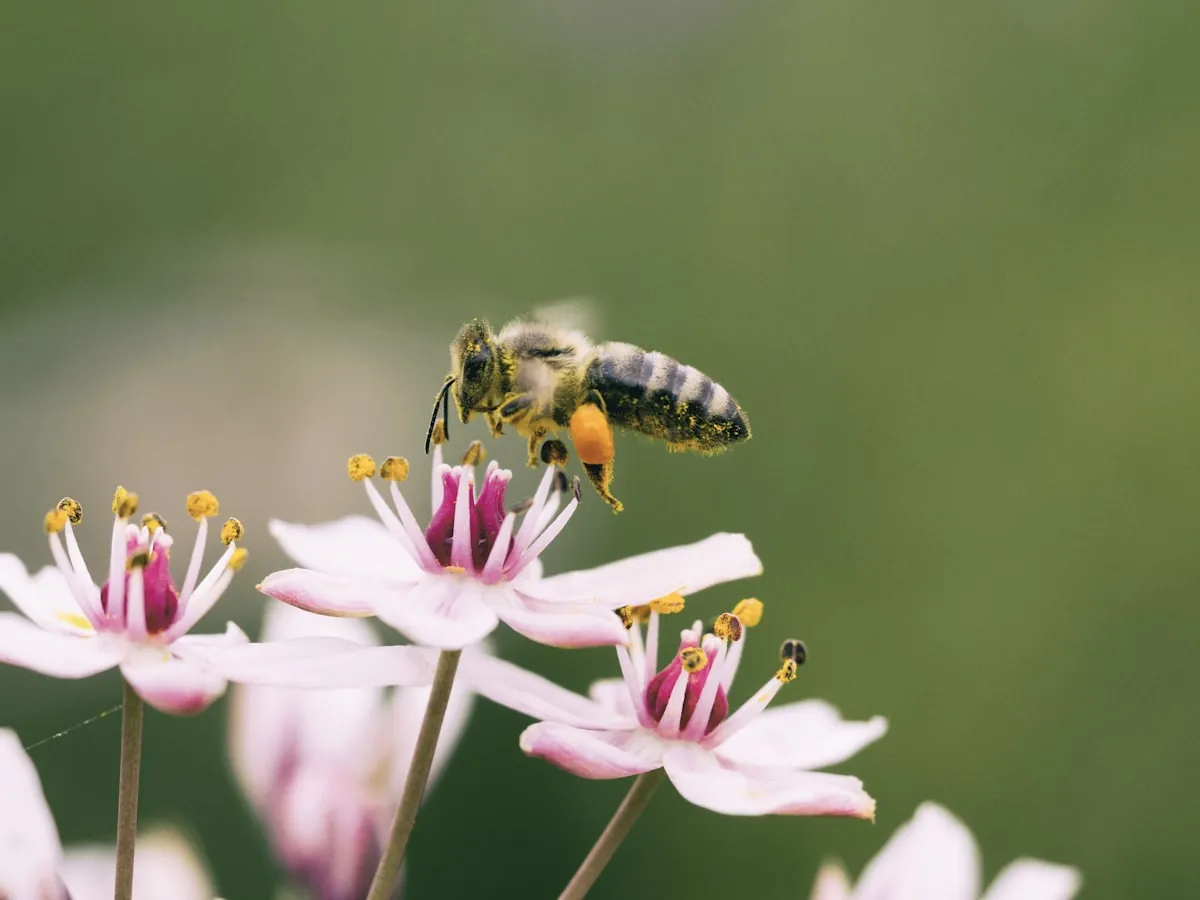
Carpenter Bee
Large and loud, boring finger-sized tunnels into soft or weathered timber. Rare in Melbourne but a genuine timber concern when present, so it is worth a proper identification.
Can damage timber
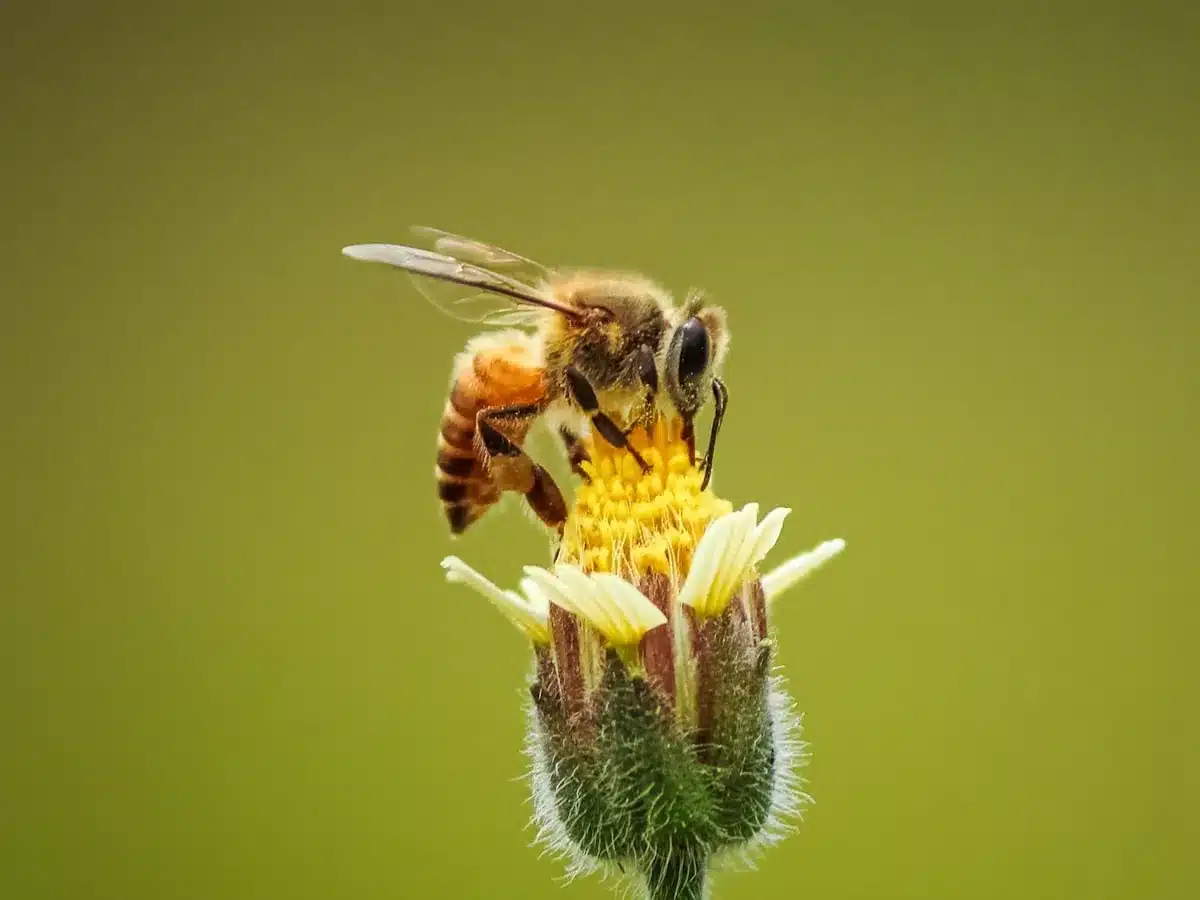
Masked Bee
Small, almost hairless and wasp-like with pale facial markings. Nests in hollow stems and small holes. Solitary, harmless and frequently mistaken for a tiny wasp.
Solitary native
Bees or wasps? They are treated very differently
Bees are furry, thickset and carry pollen on their legs; wasps are smooth, shiny and slim-waisted. Bees leave a barbed sting behind and die; a wasp can sting again and again. We relocate bees alive — wasps are a pest-control job, not a beekeeping one. Describe what you can see and we will tell you straight away which one you have.
Signs There Is A Colony In The Building
A swarm is obvious. An established hive inside a cavity is much quieter — these are the clues that give it away.
What You Might Notice
- Steady two-way traffic to one hole in a wall or eave
- A dark stain or damp patch spreading on a ceiling
- A low humming you can hear through the plaster
- Bees inside the house near a chimney or downlight
- A football-sized cluster hanging on a branch or fence
- Sudden sweet smell in a room in warm weather
What Happens If It Waits
- Melting honey staining plaster and rotting timber
- Comb left in a wall attracting ants, moths and beetles
- A new colony moving into the same cavity next season
- Stings around a door, path or play area
- Anaphylaxis risk for allergic household members
- Damage costs that outgrow the removal cost quickly
Four Things Not To Do
Most of the expensive bee jobs we attend started with a well-meant DIY attempt.
Do not spray it
Insecticide kills foragers but rarely the colony, and it makes the honey and comb toxic to any beekeeper who could otherwise have saved them.
Do not block the entrance
Sealed-in bees chew through plaster into the room, or die and leave kilos of rotting honey inside the cavity.
Do not throw water or fire at a swarm
It provokes a docile cluster into a defensive one, and swarms usually move on by themselves within a day or two anyway.
Do not let a “removal” skip the comb
Any job that kills the colony and leaves comb in the wall guarantees staining, pests and a repeat colony. Removing the comb is the actual work.
A Clear Four-Step Removal
Know what was found, what is being done, and where the colony ends up.
Identify & Assess
We confirm it is honey bees rather than wasps, find the true extent of the cavity, and work out whether it is a swarm or an established colony.
Quote In Writing
You get a quote and a clear scope before anything is opened — including any access work and how the surface will be left.
Live Removal
Swarms are collected into a box. Established hives are cut out with the comb and brood, and the queen is secured so the colony stays together.
Clean, Seal & Relocate
The cavity is cleaned and deodorised, the entry sealed under our 12-month guarantee, and the colony rehomed into a managed apiary.
Honest Pricing, Quoted In Writing
Melbourne bee work ranges from about $100 for an easy swarm to $1,000+ for a complex structural cut-out. Ours start lower.
Swarm Collection
Accessible swarms at ground or ladder height.
- Identification and safety assessment
- Colony collected into a hive box
- Queen secured so the swarm stays put
- Relocated to a managed apiary
- Advice on why they chose that spot
Beehive Cut-Out
Wall, roof, floor or tree. Final price confirmed after inspection.
- Cavity opened and fully exposed
- All comb and brood removed
- Queen and colony rehomed alive
- Cavity cleaned and deodorised
- Entry sealed with a 12-month guarantee
Complex & Commercial
Height access, multi-storey, heritage or trade sites. Quoted after inspection.
- Everything in the cut-out program
- Height or restricted-access work
- Staged works around trading hours
- Full photo documentation and report
- Repair and make-good coordination
All prices carry our 5% price-beat promise. Guide prices are not a site-unseen quote — access work, height, plaster repair and hive size are confirmed on inspection and priced in writing before we start.
Sealed, Guaranteed, And The Colony Kept Alive
12-month seal-up guarantee: when the cavity is cleaned and sealed as part of your written scope, that entry point is covered for 12 months. If bees get back in through an opening we sealed, we return and repair it at no labour charge.
Live relocation promise: every colony we remove goes to a managed hive. We do not exterminate honey bees, and we will not quote you for a job that does.
5% price-beat: bring us a written like-for-like quote from another licensed Melbourne operator and we will beat it by 5%.
The guarantee covers the entry points documented as sealed by us, not unrelated new openings elsewhere on the building. Access limitations, plaster repair and make-good are stated in the written quote. Price beat applies to comparable scope, verified before booking.
Bees Are The Whole Job
Apex Bees Control is a Melbourne live-removal service. We are set up to keep colonies alive: hive boxes, smokers, bee vacuums and somewhere for the bees to actually go afterwards. A general pest company is set up to kill them, which is a very different outcome for your wall and for the bees.
Every job ends with photos, a written record of what was removed and sealed, and a colony rehomed in a managed apiary. Read more about swarm removal, beehive removal and bee proofing.
Commercial & Body Corporate
Schools, cafes, aged care, retail and managed properties: documented removals, staged around your trading hours, with the reporting your building manager or auditor expects.
Bee Removal Across Melbourne
Attendance throughout metropolitan Melbourne, subject to beekeeper availability and safe access.
Bee Removal Questions
Not sure whether it is bees or wasps? Describe them when you call and we will tell you.
Are you beekeepers or a pest control company?
Beekeepers first. Searches for beekeeper removal near me, beekeeper removal and beekeeper hive removal all describe exactly what we do, and bee hive removal near me reaches the same team. If you found us looking for bee removal near me, a bee removal service near me, a bee catcher near me, a bee specialist near me or simply local bee removal, it is one crew with one number.
How fast can you get to an active colony?
Same day across Melbourne wherever we can. Emergency bee removal is what most callers need — a colony at a doorway, a school gate or a childcare fence — and emergency bee removal near me is answered around the clock rather than routed to a message bank.
Hive, nest or colony — do you take all of them?
Yes. Bee hive removal, bee hive removal Melbourne and beehive removal Melbourne are the same job to us, and so is bee nest removal or bee colony removal. Honey bee removal is the one we care most about doing properly, because the comb has to come out too: to remove bees from house walls — and to remove honey bees from house cavities — and leave the wax behind is to invite the next swarm into the same void.
There are bees inside my wall or chimney
That is a cut-out, not a spray job. Removing bees from wall cavities, bee removal from house walls and bees in house wall enquiries all need the comb opened, lifted and rehomed. Bees in chimney removal and a bee hive in chimney are the same principle, and bee removal from chimney near me is a regular winter call. A bee swarm in chimney that has not yet built comb is far cheaper to move, so ring early.
What about a swarm hanging in a tree?
That is the easy one. Bee swarm removal Melbourne is often a twenty-minute job, and bee swarm removal near me, honey bee swarm removal, swarm of bees removal or a bee swarm collector near me all mean the same call-out. Bee swarm relocation into one of our own hives is the standard outcome.
What does it cost?
Swarms are the cheapest and cut-outs cost more because they take hours. Beehive removal cost, bee hive removal price, honey bee removal cost, bee nest removal cost and bee removal cost near me all depend on one thing: whether the comb is reachable. You get a clear written quote before we travel.
Do you ever kill bees?
No. People search bee control Melbourne, bee pest control Melbourne and even bee exterminator Melbourne, and we would rather say plainly that we are none of those things for honey bees. Humane bee removal is the whole business — no kill bee removal near me, bee relocation Melbourne and bee relocation near me describe it accurately. European wasps are a different animal and are treated, not relocated.
How much does bee removal cost in Melbourne?
Swarm collection starts from $149, a beehive cut-out from a wall or roof from $495, and complex or commercial jobs from $895. You always receive a clear written quote before work begins, and we beat any written like-for-like quote by 5%.
Do you kill the bees?
No. Every colony we remove is relocated alive into a managed hive box. We are beekeepers rather than exterminators, and we will not quote you for a job that destroys the colony.
What is the difference between a swarm and a hive?
A swarm is a temporary cluster of bees resting while scouts look for a home – no comb, usually docile, and cheap to collect. A hive is an established colony with wax comb, brood and stored honey inside a cavity, which needs a cut-out to remove properly.
Can you remove bees from a wall or roof?
Yes, and that is the majority of our work. The cavity has to be opened to reach the comb, because a colony cannot be removed properly through the entrance hole. We agree the access and make-good in writing first.
Why can’t you just spray them?
Spraying kills foragers but often not the colony, contaminates the honey so no beekeeper can save them, and leaves comb in the wall. That comb then melts, stains ceilings and attracts ants, wax moth and beetles.
How quickly can you attend?
The phone is answered 24/7 and same-day attendance is often possible for swarms, which can move on within a day or two. Cut-outs are scheduled once we know the cavity and access.
Is it safe if someone in the house is allergic?
Tell us when you call and we will prioritise the job and set up an exclusion zone. Bee sting anaphylaxis is a medical emergency – if someone is having a systemic reaction, call 000 first.
Will the bees come back?
Not through an opening we have cleaned and sealed – that carries the 12-month guarantee. Old hive scent draws new swarms for years, which is exactly why the cavity is deodorised and closed rather than just emptied.
Are native bees a problem?
Almost never. Australia’s 1,700+ native species are mostly solitary and stingless or near enough, and they do not build large comb colonies in buildings. If you have natives we will usually tell you to leave them alone.
Do I have bees or wasps?
Bees are furry and thickset with pollen on their legs; wasps are smooth, shiny and slim-waisted. Bees leave a barbed sting and die, wasps sting repeatedly. Describe the body shape and whether they carry pollen on their legs and we will confirm – we relocate bees, but wasps are a pest-control job.
What does the removal leave behind?
An empty, cleaned and sealed cavity. We discuss plaster or cladding make-good in the written quote, including how the surface is left.
Ready To Get Them Out Alive?
Tell us what you have seen and where in Melbourne you need help.